
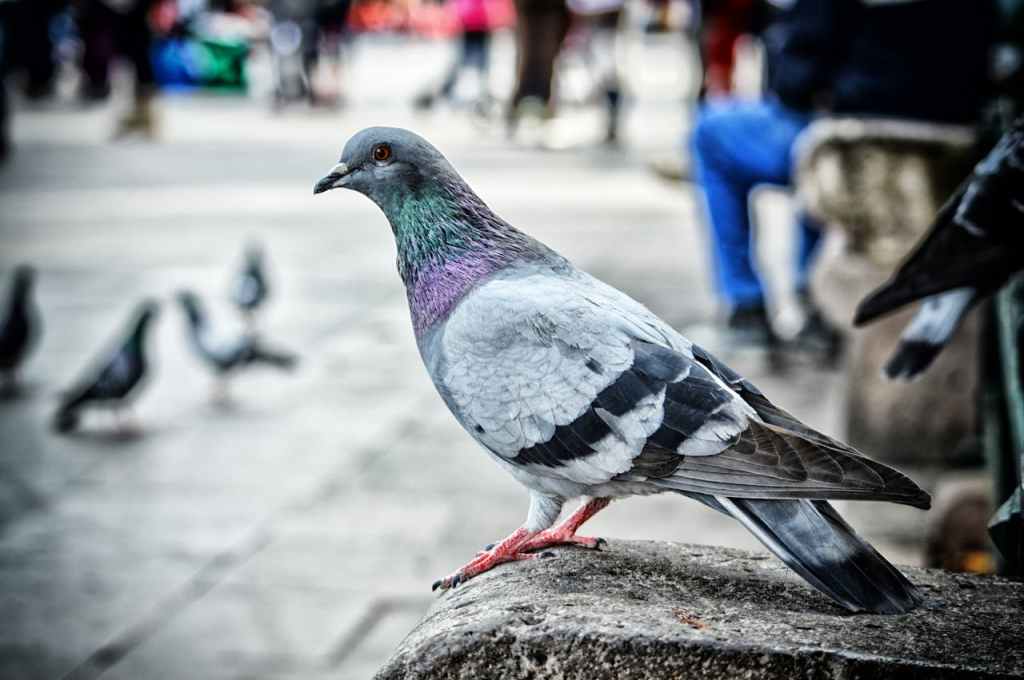
I recently read a post on a social medium which talked about how humans have historically moved pigeons to cities to use them as pets trained for delivering messages and small packages.
As technology advanced, the need for using pigeons as messengers diminished to the point where they became useless to us, and we ended up throwing them out of our rooftops.
We ended up throwing them away.
This prompted me to think again about humans’ relationship with our pets, and with animals in general.
Let me start by saying we have a hypocritical relationship with other animals, at the very least.
What do I mean by this?
Well, we seem to pick and choose which animals are treated better or worse according to historical and cultural norms, which animals are more beneficial to us, which are more pleasing to the eyes, or even which ones provide a certain social status to us. In many cases, the animals which don’t happen to fall in one of those categories are good to be tortured or become food.
Or both.
To better illustrate the differences, let’s pick a dog, a cow, and a rat.

Dogs have been our companions for as long as we can remember, and for as long as history has been recorded. Dogs will play with us, they will enjoy running in open areas, playing with toys, and cuddling up to us to sleep by our side or at our feet. They will come to trust us more than anyone else in the world.
They will trust us with their lives.
Most dogs will even act this way around masters who will underfeed them or tie them to a post outside at the mercy of the elements. Many dogs have died without having ever gone out on a walk, or having ever received a treat or a toy, or having ever being petted by their masters.
And many more will.
Now, regardless of how much or how little someone likes dogs, in most parts of the world, generally dogs are off limits when it comes to food.
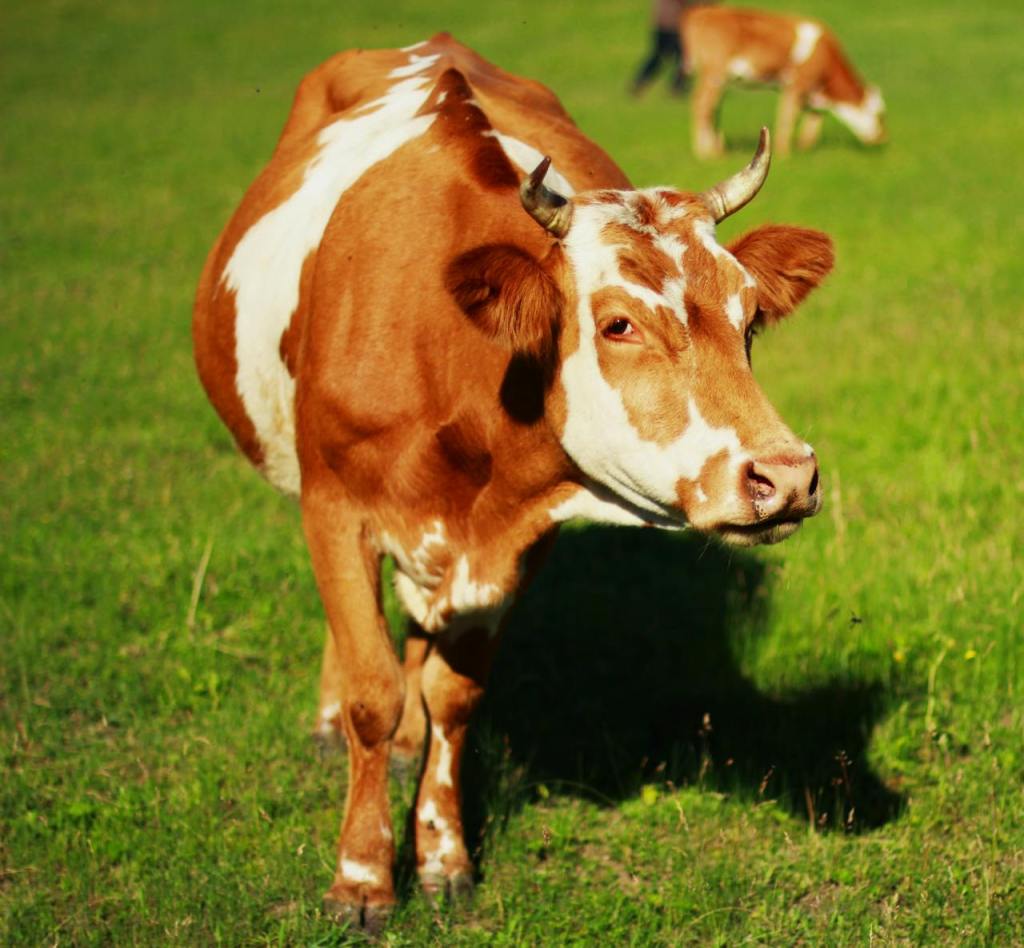
We will eat chicken, cow, lamb, duck, pig, fish without a second thought though. And some of these animals (cows, goats, and pigs) have been domesticated for a long time.
Research has demonstrated cows are intelligent animals at some level. Capable of feeling stress, fear, and empathy, as well as retain information in their brains at least for several weeks.
In their studies, Marino and Allen found that, for example, a cow can smell the cortisol (a hormone caused by stress) emanating from another cow, and they will stand close to that cow as to signal emotional support. The empathetic cow will then begin releasing cortisol as well, sharing in the stress of their neighbor, or simply put, showing empathy.
Among other things, they also noted cows’ ability to bond with certain cows more than others, creating groups similar to what we know as families. They can also tell other cows and humans apart from each other.
How do we treat cows?
Dairy farms need to force their cows to give birth so they can keep producing milk. They will separate male calves from their mothers shortly after being born as they are useless to the dairy industry.
These calves are often raised for veal and aren’t allowed to run at all, or even to walk, so that their meat will stay tender. They’ll be put in small crates that only allow enough room to stand.
Their lifespan will be very short, with most veal calves reaching only sixteen to eighteen weeks old, and special types of veal reaching at most three weeks old, with some being killed with their umbilical cord still attached.
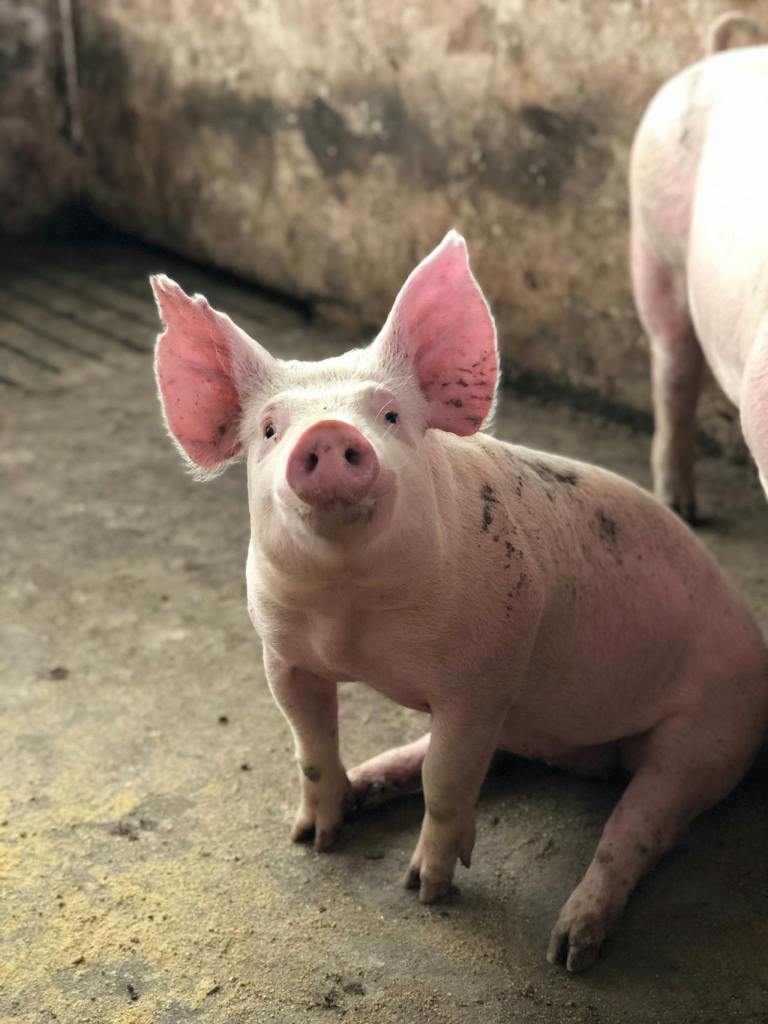
Another New Roots Institute article says decades of research have shown that “pigs are at least as intelligent as dogs, and in many cases even outperform dogs on tests of cognition, memory, and other measures of intelligence” and goes as far as to say, “pigs are also similar to dogs in that they love to be around humans, and will often turn to humans first for emotional support”.
They mention that people who work with pigs can often tell the difference in personalities between the animals, pointing out some have distinct likes and dislikes, such as enjoying playing, belly-rubs, or as being stubborn about certain things or situations.
That’s cute…
Some pig farms’ employees have been caught on video or otherwise denounced as performing some of the worst kinds of torture on these innocent animals, such as hitting them with clubs to the point of breaking their legs, or slicing open a live pregnant momma pig to kill her piglets.
Are we not concerned about the serious level of mental instability required to perform such acts?
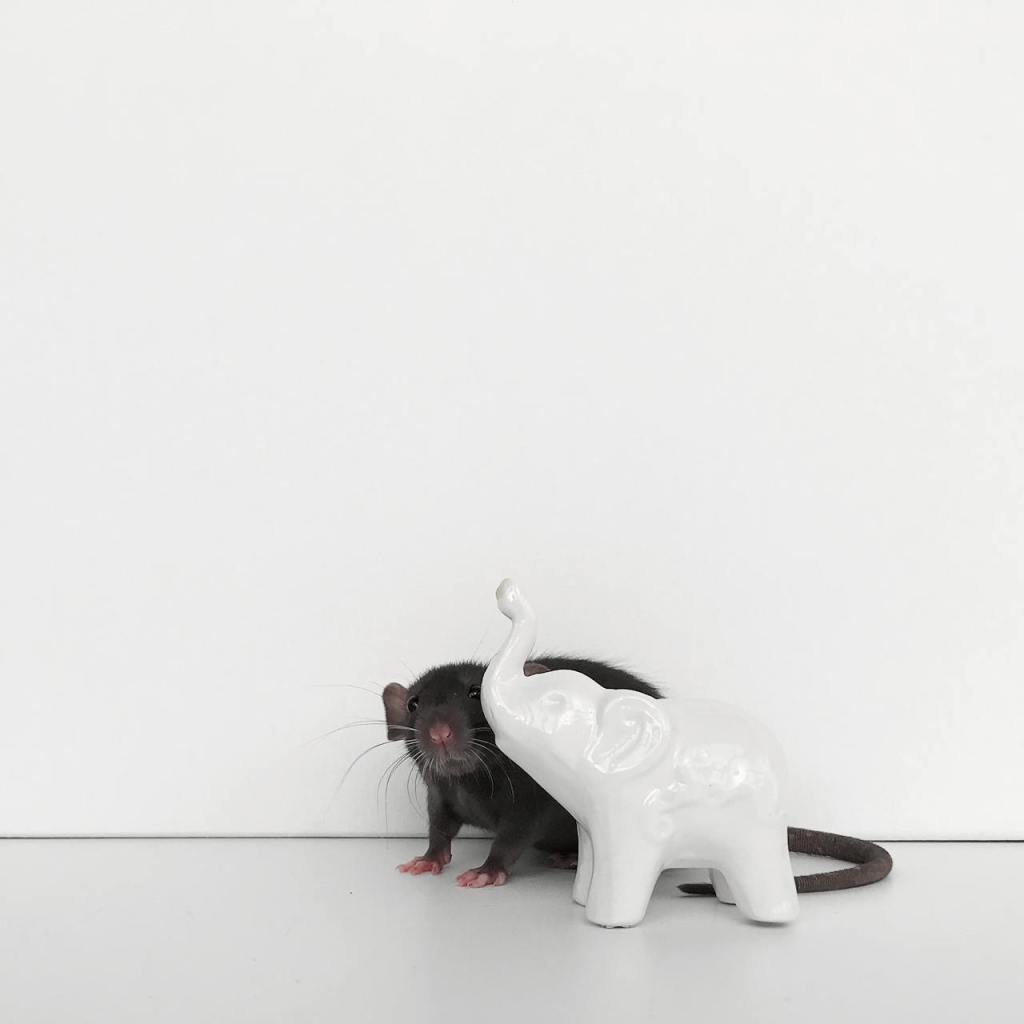
Then we have rats.
Rats are constantly used for experiments of all kinds. Rats can reproduce at a faster rate than most non-rodent mammals and are small. They’re the smallest animal we can test on which has significant genetic similarities to human beings, hence why they’re the perfect subject to our experiments.
This begs the question: is it ethical to torture living beings to advance our knowledge and improve the quality of life for human beings?
That is hardly a yes or no question when you consider the variety in contexts. Ask a cancer patient, or their closest relatives, and you may get one answer. Ask someone in a different situation and they may have a different answer.
Unfortunately, this doesn’t even end with rats.
Experiments are not only done on rats, but also dogs (our best friends!), different kinds of primates, pigs, and fish, among others. Depending on the individual’s philosophy and experience, the level of utilitarianism in their response to this issue may be lower or higher.
Well, then how can we improve how animals are treated?
I personally believe that the analysis, as I tend to say in relation to most issues, should be done at a micro level.
At a macro level, many (perhaps most) will probably agree that the greater good for the greater number of people trumps everything else.
At a micro level, or as individuals, perhaps we should at least be aware of the suffering we can inflict upon other living beings, or the suffering we can avoid, through our action or inaction.
This is to say, one should be capable of analyzing one’s own feelings towards how we treat other animals.
Can we force each other to stop eating meat altogether?
Well, it could be a long discussion, but let’s say the short answer is probably not.
Often we will consider the fact that our ancestors have been raising animals for food since the beginning of time as we know it, and as it just being part of the cycle of life.
And we’ll usually leave it at that.
Some will say the purpose of animals such as cows and pigs is to be eaten by humans and other predators, and that there’s no other alternative for them in the world.
I will say, even though I eat meat myself, I like the alternative where we show a minimum respect for all animals, even those we end up feeding on.
The alternative where we do not enjoy causing extra, unnecessary suffering.
The alternative where the how also matters.

Then, as empathetic beings, what’s the next best thing we could do for these animals?
Could it be that if we can’t get ourselves to stop eating meat (and I’m not saying we should or shouldn’t), that we could at least draw some lines as to what’s considered “humane” treatment of animals raised for food and other products?
Could we for example consider the following elements? (in no particular order)
- Demonstrate respect and gratitude for the animal(s) that died so that we could live
- Provide a reasonable level of comfort for those animals whose practically inevitable destiny is to die to become food for human consumption
- Raise awareness (among ourselves as well as newer generations) that a living being unwillingly gave its life so that we could have food on our table
- Be aware that most living beings have at some level, some of the same feelings us humans have – in some sense, a survival instinct, an aversion for suffering, and a longing for freedom and the reduction of suffering
- Seek more law-making that will treat animal abuse as a crime, so that perpetrators will be judged accordingly – after all, some studies have shown a correlation between animal abuse and psychopathic traits
- Understand that:
- Wild animals kill each other for food because they have instincts, but humans have options as to how they treat other living beings
- No living being is to be treated as a product of an industry, but rather a product of the same nature which spawned us too
Think about it.
There’s a chance that one day we could be the cattle to a superior species which may see us simply as that – cattle.
What would be our objection in that case? That we deserve better treatment?
I believe that while there may not be a definitive answer, there’s always room for improvement. There are always ways in which we can be and do better:
- Consider adopting pets instead of encouraging greedy breeders (not saying they all are)
- Donate to your local animal shelters, or volunteer – If you do, always do the bare minimum research to verify the organization you’re helping is for real helping animals
- Switch to cruelty-free products, or humane-treatment products – Again, if this is something you’re interested in, due diligence is in order to ensure the companies you choose are truly doing what they say they are doing
- Discuss with friends and neighbors ways in which laws could help mitigate animal abuse (harsher fines and criminal charges, for example), then speak up and contact federal, state, and local lawmakers about your proposals
Or, to start with, it can be as simple as being nice to any given animals we encounter (which in many cases may simply mean leaving them alone), treating our pets with love and respect, and just overall being aware and empathetic.
We may find we can also learn a lot about our relationship with other humans along the way.
How do we treat animals? Should we individually reflect on our consumer habits? Is there a way we can treat animals better even if we do consume animal products? Would it make a difference at some level?
What do you think?
 My 2 Argentine Pesos
What’s your opinion on this?